
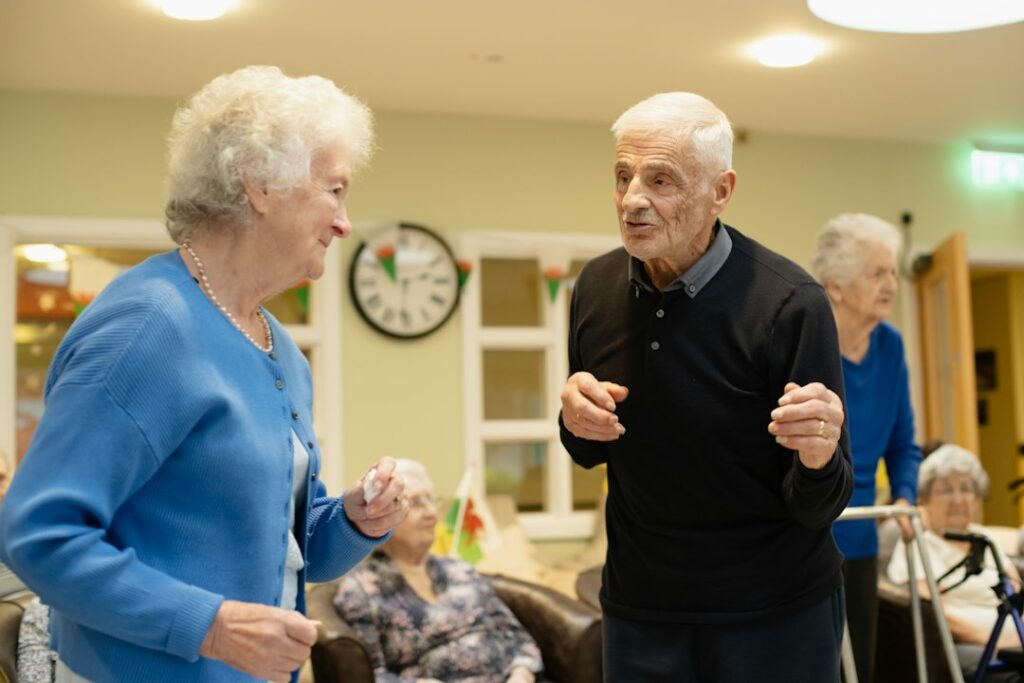
What does an active lifestyle mean in assisted living?
An active lifestyle in assisted living does not require intense exercise or constant participation in organized events. It usually means having regular opportunities to move, socialize, make choices, and take part in meaningful daily routines.
For some residents, staying active may include walking through the building, joining a stretching class, helping with a garden, or attending a group activity. For others, activity may involve folding laundry, preparing a snack, talking with neighbors, reading in a shared area, or participating in a faith-based or creative program.
The goal is not to make every resident follow the same schedule. A supportive setting helps older adults remain engaged at a level that fits their health, interests, mobility, and energy.
How does assisted living encourage physical movement?
Assisted living communities often make movement easier to include throughout the day. Residents may have access to indoor walking areas, activity rooms, outdoor spaces, exercise sessions, or group programs designed for different ability levels.
Physical activity may include:
- Chair exercises and gentle stretching
- Balance and flexibility activities
- Guided walking groups
- Dancing or movement to music
- Light strength exercises
- Gardening or seasonal outdoor activities
- Games that involve reaching, tossing, or coordinated movement
These activities can support strength, balance, flexibility, and confidence. They may also help residents maintain the ability to complete everyday tasks such as standing from a chair, walking to meals, dressing, or using common areas.
Movement should be adapted to the individual. Someone recovering from an illness or living with arthritis may benefit from short, low-impact sessions rather than longer workouts. A person who uses a walker or wheelchair may still participate in movement activities with appropriate modifications.
Why are social activities part of an active lifestyle?
Social engagement is a form of activity because it encourages communication, attention, emotional involvement, and regular participation in daily life. Residents who spend time with others may have more reasons to leave their rooms, follow a routine, and stay connected.
Common social opportunities include:
- Group meals and coffee gatherings
- Card games, puzzles, and trivia
- Music programs and sing-alongs
- Discussion groups
- Craft projects
- Birthday or seasonal celebrations
- Intergenerational visits
- Shared television, reading, or hobby areas
Social activities should not be treated as entertainment alone. They can help residents build friendships, practice decision-making, and maintain a sense of belonging. A resident who is not interested in large groups may prefer a conversation with one or two people, a small activity, or a quiet shared space.
Can assisted living support independence?
Yes. Assisted living is designed to provide help with daily needs while allowing residents to remain involved in decisions and routines whenever possible. Maintaining independence does not mean doing every task without assistance. It means having appropriate control, participation, and choice.
For example, a resident may receive help with bathing but choose what to wear. Another person may need medication reminders but decide which activities to attend. Someone who needs assistance walking may still choose where to spend time, what hobbies to pursue, or whether to join a group meal.
This balance can encourage activity because residents are more likely to participate when routines reflect their preferences. Too much assistance can unintentionally reduce movement, while too little support can create fear or unsafe situations. The most useful approach provides enough help for safe participation without taking over tasks a resident can still manage.
How do activities work for residents with limited mobility?
Limited mobility does not prevent someone from having an active lifestyle. Activities can be performed while seated, from a wheelchair, with a walker, or for short periods between rest breaks.
Examples include:
- Seated leg lifts and ankle movements
- Hand exercises using soft objects
- Painting, knitting, or assembling crafts
- Cooking demonstrations with adapted tasks
- Singing or playing simple instruments
- Conversation groups
- Indoor plant care
- Memory games and word activities
An activity can be physically gentle and still be mentally or socially engaging. In some cases, a resident may benefit more from practicing transfers, reaching safely, or walking a short distance than from joining a formal exercise class.
Families may notice that older adults in Minersville, PA face seasonal barriers to outdoor activity. Snow, ice, cold temperatures, and uneven walking surfaces can make outdoor movement difficult during parts of the year. Indoor options are especially useful during winter weather, while safe outdoor time may be more practical during mild spring, summer, and fall days.
How do daily routines promote activity?
A predictable daily routine can make movement and participation feel more natural. Meals, personal care, activities, rest periods, and social time create gentle structure without requiring residents to plan every part of the day.
Routine may encourage residents to:
- Walk to meals or activities
- Spend time outside their rooms
- Practice personal care tasks
- Visit common areas
- Participate in household or recreational activities
- Maintain regular sleep and waking patterns

A schedule should still allow flexibility. Older adults may experience changes in energy, pain, mood, or medical needs. A resident who enjoys morning exercise may need a quieter afternoon. Another may be more alert later in the day and prefer activities after lunch.
What should families ask about activity opportunities?
Families evaluating assisted living can ask specific questions about how residents stay engaged. Useful questions include:
- Are activities offered every day?
- Are programs available for different mobility levels?
- Can residents suggest or lead activities?
- Is there a safe indoor walking area?
- Are outdoor spaces accessible and maintained?
- How are activities adjusted for memory loss or sensory changes?
- Can residents choose not to participate?
- Are individual activities available for people who dislike groups?
- How does the setting respond during severe weather?
It is also helpful to ask whether residents are encouraged to continue familiar hobbies. A person who enjoyed gardening, woodworking, church activities, reading, cooking, or visiting with neighbors may feel more engaged when those interests are adapted rather than replaced.
What if an older adult does not want to participate?
Reluctance is common and may have several causes. A resident may be tired, anxious, embarrassed about mobility limitations, unfamiliar with the group, or uninterested in the particular activity being offered.
Participation often improves when the first step is small. A resident might begin by sitting nearby, attending a meal, listening to music, or joining a one-on-one conversation. Staff and family members should avoid treating every activity as an obligation.
A sudden change in participation deserves attention, especially if it occurs with pain, weakness, confusion, depression, shortness of breath, or a change in appetite or sleep. These signs may indicate a health issue rather than simple disinterest and may require medical evaluation.
How can families reinforce an active lifestyle?
Families can support activity by focusing on encouragement instead of pressure. Visits that include conversation, a short walk, looking through photographs, or participating in a familiar hobby may be more meaningful than bringing gifts alone.
Practical support may include:
- Bringing comfortable, well-fitting shoes
- Sharing information about past interests
- Encouraging regular visits at times when the resident has the most energy
- Celebrating effort rather than performance
- Asking what activities feel enjoyable or tiring
- Supporting safe independence during visits
An active lifestyle in assisted living is built from ordinary opportunities: moving safely, making choices, connecting with others, and continuing familiar interests. The most effective programs recognize that activity looks different for every resident and can change from one day to the next.
